
Most brands spend a lot of time thinking about what their ads say. Far fewer think about where those ads appear.
Yet the environment surrounding an advertisement often influences perception as much as the creative itself. A strong message placed in the wrong context can lose credibility before it has a chance to make an impact. In contrast, a well-placed ad inside a trusted environment can strengthen brand perception before a user even engages with it.
That is why Premium Inventory Access has become increasingly important in modern programmatic advertising. In a digital ecosystem overflowing with content, inventory quality is no longer a secondary consideration. It is a strategic advantage.
The Hidden Cost of Low-Quality Placements
The open web offers almost unlimited inventory. At first glance, that sounds like an opportunity. More websites, more impressions, and more reach should create better outcomes.
In reality, the opposite often happens.
Many advertisers unknowingly find themselves appearing alongside low-value content, excessive ad clutter, or websites created primarily to generate advertising revenue rather than audience value. While these placements may offer lower CPMs, they often come with hidden costs.
Trust is one of them.
Consumers rarely separate an ad from the environment in which they encounter it. When a respected brand repeatedly appears in questionable surroundings, some of that doubt transfers. Not consciously, perhaps, but perception is shaped by association. The result is a subtle erosion of credibility that no amount of creative optimization can fully fix.
Why More Inventory Isn’t Always Better
One of the biggest misconceptions in digital advertising is that scale automatically creates value. But the truth is all perceptions are not created equal.
A thousand impressions in a low attention environment may be less effective than a tenth of that volume served by trusted publishers to engaged audiences. Here is when quality of inventory becomes a competitive differentiation.
Marketers are increasingly careful about the placements of their brands. They’re focusing on situations where attention, trust and meaningful interaction can flourish, not chasing every impression that comes along. Now we are talking about quality, not quantity.
And rightly so.
What Defines Premium Inventory?
When people hear the term Premium Inventory Access, they often assume it simply means expensive websites. The reality is far more nuanced. Premium inventory is defined by the quality of the environment, the audience, and the experience.
A premium publisher typically demonstrates:
- Strong editorial standards and content quality
- Verified human audiences rather than automated traffic
- Consistent audience engagement and attention
- Contextually relevant environments
- Transparent advertising practices
Perhaps most importantly, premium publishers attract audiences that are actively consuming content rather than passively scrolling through it. Attention is increasingly scarce. Premium environments help preserve it.
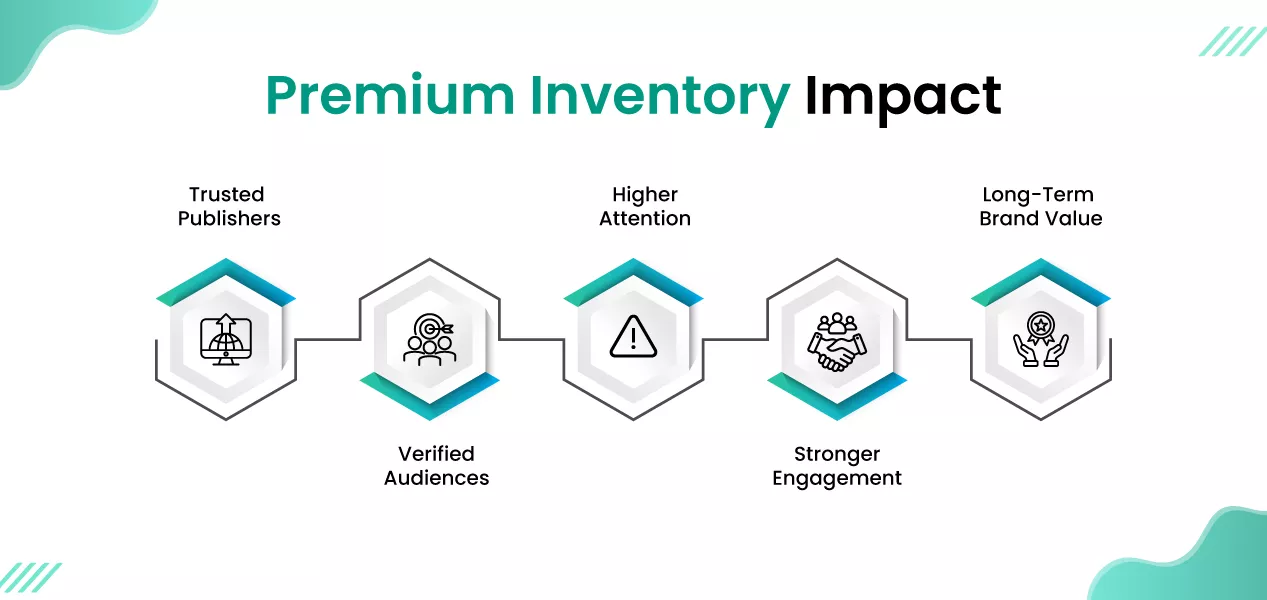
Why Premium Inventory Performs Better
Quality inventory does more than protect reputation. It often produces better business outcomes.
Ads placed in trusted environments tend to benefit from stronger attention, higher engagement, and more reliable measurement. When users are genuinely engaged with content, advertising becomes part of a quality experience rather than an interruption.
This is also why conversations around verified human attention have become increasingly important across the industry. Premium inventory helps reduce exposure to invalid traffic, improves audience quality, and creates cleaner performance signals that marketers can actually trust.
Over time, those advantages compound.
Higher-quality environments create stronger interactions. Stronger interactions create better results.
The AdMozart Role: Curation Over Chaos
Not all supply is created equal.
The role of a modern SSP should extend beyond simply making inventory available. The best platforms act as curators, helping advertisers navigate an increasingly fragmented ecosystem.
At AdMozart, the focus is not on passing every available impression through the pipeline. It focuses on enabling premium inventory access through carefully curated publisher relationships and quality-focused supply paths.
The technology is designed to filter out low-value inventory and prioritize trusted environments to help advertisers reach audiences where trust and attention already exist.
This approach creates a cleaner path between advertiser and publisher while reducing many of the risks associated with open-web buying.
Why Your Brand Needs Premium Environments
Advertising has always been about association. Brands invest heavily in creative, messaging, and audience strategy because perception matters. The environment where that message appears deserves the same level of attention.
When campaigns prioritize Premium Inventory Access, they gain more than visibility. They gain credibility. They gain context. They gain access to audiences who are actively engaged rather than simply available. In an era where attention is fragmented and trust is difficult to earn, those advantages matter more than ever.
Conclusion
The future of programmatic advertising will not be defined by who can buy the most impressions. It will be defined by who can create the most meaningful ones. Premium inventory is ultimately an investment in trust. And trust remains one of the few advertising advantages that compounds over time.
For brands focused on sustainable growth, reputation, and performance, quality should never be an afterthought. It should be the foundation. That is the philosophy that continues to shape how Admozart approaches inventory, publisher relationships, and long-term advertising success.
Comments are closed