When a campaign underperforms, the first step is usually to revisit the creative, adjust audience targeting, or rethink bidding strategies. Those are reasonable places to look. But they are not always where the problem begins.
Sometimes the issue isn’t who is seeing your ads. It’s how your budget gets there. Before an impression reaches a publisher, an advertising dollar can pass through multiple exchanges, resellers, and intermediaries. Every additional stop adds cost, complexity, and uncertainty. By the time the impression is finally served, a portion of your budget may already have disappeared into transaction fees rather than working media.
This is why programmatic supply chain transparency has become one of the industry’s biggest priorities. It gives advertisers a clearer view of where their money travels and helps ensure that more of every campaign budget reaches the inventory that actually matters.
The Hidden Cost of Invisible Middlemen
The modern programmatic ecosystem offers incredible scale, but scale often comes with complexity. Many impressions are available through multiple supply paths. While that creates buying flexibility, it also creates duplication. The same inventory can be resold several times before it reaches an advertiser, with every intermediary taking a share of the transaction.
The result is a supply chain that is often more expensive than it appears. Instead of investing directly in media, advertisers may unknowingly fund unnecessary layers that contribute little to campaign performance.
This hidden leakage shows up in several ways:
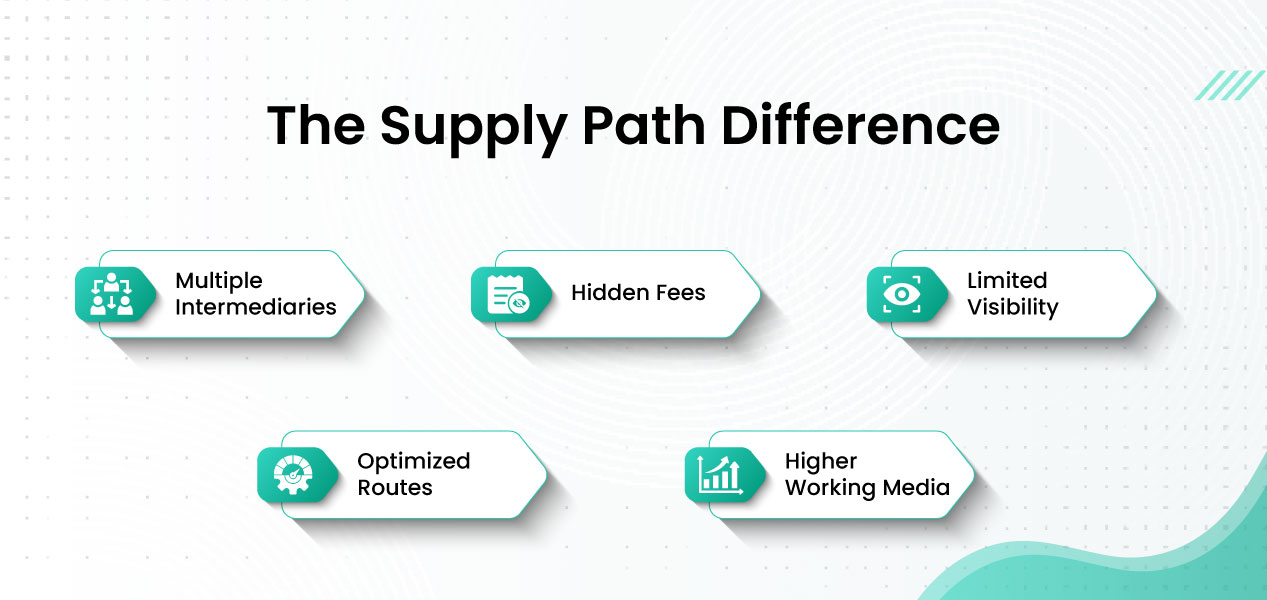
- Multiple reseller fees reduce working media.
- Duplicate inventory creates inefficient auctions.
- Limited visibility into who is selling the inventory.
- Increased exposure to low-quality or unauthorized supply paths.
None of these issues are immediately visible inside campaign reports. They simply reduce the value generated from every advertising dollar.
Why Working Media Matters More Than Ever
Two campaigns can generate similar impressions, clicks, and CPMs while producing very different business outcomes.
The difference often comes down to how much of the original budget actually reaches the publisher. Working media represents the portion of spend that directly funds advertising rather than operational costs. As marketers face increasing pressure to demonstrate efficiency, improving working media has become just as important as improving campaign performance.
Every unnecessary handoff reduces the percentage of budget allocated to creating real value. That is why programmatic supply chain transparency is no longer viewed as an operational concern. It has become a financial strategy.
Supply Path Optimization Is More Than a Technical Exercise
Supply Path Optimization, or SPO, is often described as a technical process managed behind the scenes.
In reality, it is one of the simplest ways to improve advertising efficiency. Think about planning a journey across a city. You could choose a route with six toll booths, multiple diversions, and constant traffic, or you could take the direct highway.
Both routes eventually reach the destination.
One simply gets there with less friction.
The same principle applies to programmatic buying. A cleaner supply path reduces unnecessary intermediaries, improves transaction transparency, and allows a greater share of your investment to reach premium advertising opportunities.
Modern SPO strategies evaluate supply routes based on factors such as direct publisher relationships, latency, auction quality, and transaction efficiency instead of simply choosing the cheapest available path.
Transparency Creates Accountability
For years, advertisers had limited visibility into who was actually selling inventory.
Today, standards such as sellers.json and the Supply Chain Object (SChain) are helping change that. Rather than treating every bid request as a black box, buyers can verify whether inventory is coming directly from an authorized seller or through multiple reseller layers.
These standards make programmatic supply chain transparency measurable rather than aspirational. As advertisers continue optimizing the path to transparency in programmatic advertising, they are better positioned to remove unnecessary complexity and make more informed buying decisions.
The Admozart Approach
At Admozart, transparency begins with simplifying the route between advertisers and publishers.
The platform is built to focus on cleaner supply lines, better interoperability and more efficient programmatic execution, rather than just transaction volume. By combining intelligent supply channel optimization with a single infrastructure, Admozart helps to remove unnecessary intermediaries while offering better visibility throughout the buying process.
The objective is straightforward. Allow more of every advertising dollar to reach quality media instead of disappearing into operational overhead. Because better programmatic performance starts long before the auction itself.
The Future Belongs to Transparent Supply Chains
Programmatic advertising has matured beyond simply buying impressions at scale. Today, competitive advantage comes from understanding how media is bought, who participates in the transaction, and how efficiently budgets move through the ecosystem.
Brands that embrace programmatic supply chain transparency gain more than operational visibility. They gain stronger financial control, cleaner reporting, and greater confidence that their investment is reaching the places where it creates real value. The future of programmatic isn’t about spending more. It’s about making sure more of what you spend actually arrives where it should.
Comments are closed